01: Data Science for PHP Developers: What It Is and Why It Matters
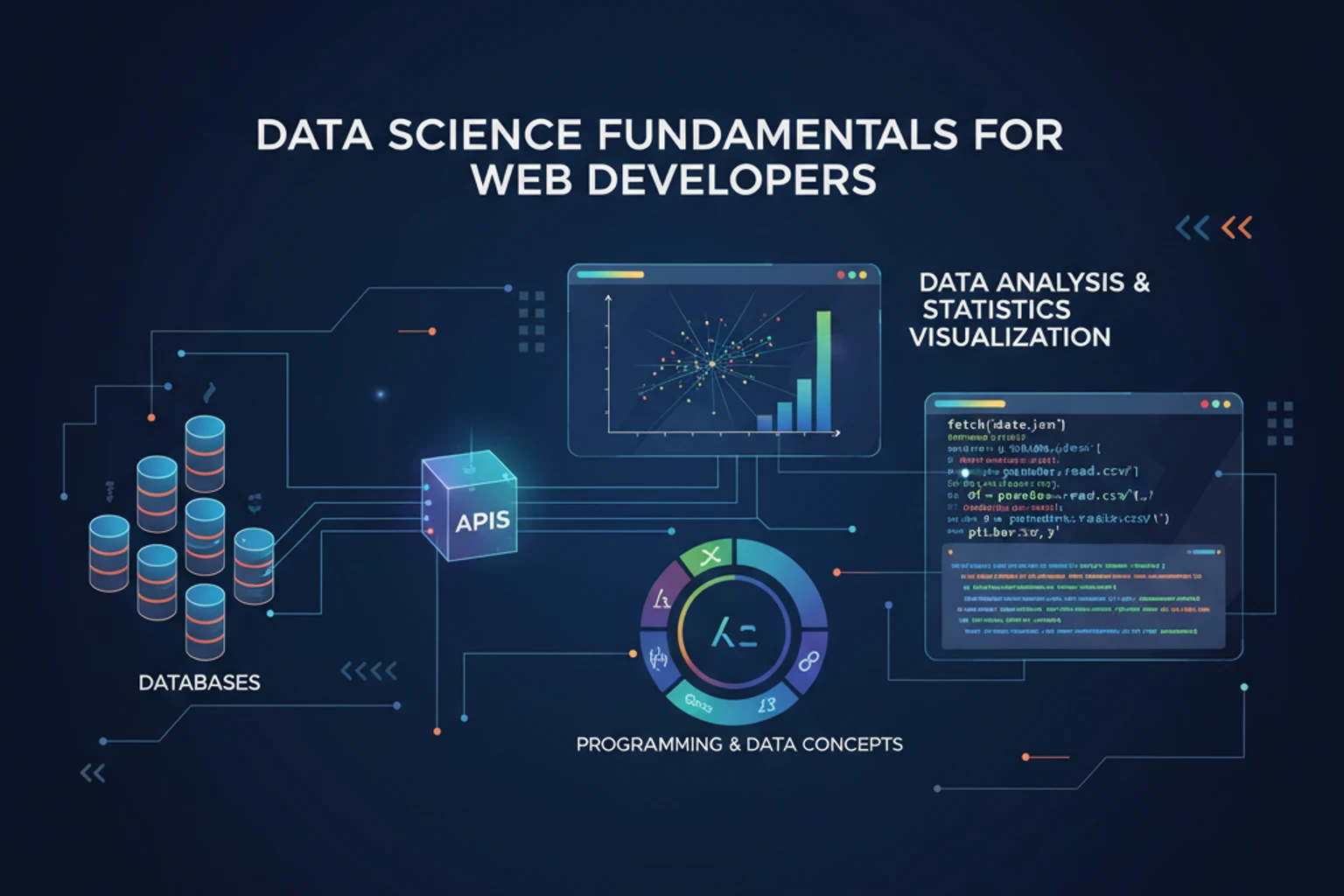
Chapter 01: Data Science for PHP Developers: What It Is and Why It Matters
Section titled “Chapter 01: Data Science for PHP Developers: What It Is and Why It Matters”Overview
Section titled “Overview”Data science has become one of the most talked-about fields in technology, but for many PHP developers, it feels like an exclusive club reserved for Python developers with advanced mathematics degrees. This couldn’t be further from the truth. Data science is fundamentally about extracting insights and value from data—and PHP developers already have many of the essential skills needed to do this work effectively.
In this chapter, we’ll demystify data science by explaining what it actually means, how it differs from (and overlaps with) related fields like machine learning and analytics, and most importantly, why PHP is a legitimate and powerful tool for data science work. You’ll learn about the data science lifecycle, discover where PHP fits naturally into data workflows, and see real-world examples of data science applications that PHP developers build every day.
By the end of this chapter, you’ll understand that data science isn’t about the programming language you use—it’s about asking the right questions, understanding your data, and building systems that turn data into actionable insights. And as a PHP developer, you’re already equipped with many of the skills you need to succeed in this field.
About This Series: Chapters 1-12 focus on building data science skills using pure PHP, covering everything from data collection and analysis to machine learning basics. Optional bonus chapters 13-20 teach you Python integration for advanced scenarios where specialized libraries provide significant advantages. You can succeed with PHP alone—Python is taught as an optional enhancement, not a requirement.
Prerequisites
Section titled “Prerequisites”Before starting this chapter, you should have:
- PHP 8.4+ installed (verify with
php --version) - Basic understanding of PHP programming
- Familiarity with web development concepts (databases, APIs, HTTP)
- Curiosity about working with data and analytics
- Estimated Time: ~45 minutes
What You’ll Learn
Section titled “What You’ll Learn”By the end of this chapter, you will understand:
- What data science actually means (beyond the buzzwords)
- How data science differs from data analysis, business intelligence, and machine learning
- The complete data science lifecycle from problem to production
- Where PHP fits naturally in data science workflows
- Why this series takes a PHP-first approach
- What tools you’ll use throughout the series
- Common data science use cases that PHP developers encounter
- Why your existing PHP skills are valuable for data science work
- When to use PHP vs when to integrate with Python or other tools
Objectives
Section titled “Objectives”- Understand the core definition and scope of data science
- Recognize the phases of the data science lifecycle
- Identify where PHP excels in data science workflows
- Distinguish between related fields (analytics, BI, ML, AI)
- Appreciate why this series is different from Python-first resources
- Learn what tools you’ll use throughout the series
- See real-world use cases for data science in PHP applications
- Recognize how your PHP skills transfer to data science work
Step 1: Defining Data Science (~5 min)
Section titled “Step 1: Defining Data Science (~5 min)”Understand what data science is and dispel common misconceptions.
What Is Data Science?
Section titled “What Is Data Science?”At its core, data science is the practice of extracting knowledge and insights from data using scientific methods, processes, algorithms, and systems. It combines elements from:
- Statistics: Understanding patterns, distributions, and uncertainty
- Programming: Collecting, cleaning, and processing data
- Domain expertise: Knowing what questions to ask and what answers matter
- Communication: Presenting insights to stakeholders who make decisions
Here’s what data science is NOT:
- ❌ It’s not just machine learning or AI
- ❌ It doesn’t require a PhD in mathematics
- ❌ It’s not exclusive to Python (though Python is popular)
- ❌ It’s not always about big data or complex algorithms
- ❌ It’s not magic—it’s systematic problem-solving with data
The Three Pillars of Data Science
Section titled “The Three Pillars of Data Science”Data science combines three essential skill sets:
- Programming Skills: Building systems to collect, process, and analyze data (PHP, SQL, APIs)
- Statistical Knowledge: Understanding patterns, distributions, correlations, and analysis techniques
- Domain Expertise: Knowing your business context, what questions matter, and how to interpret results
As a PHP developer, you already have strong programming skills. This series will help you build statistical knowledge while applying it to domains you understand (web applications, e-commerce, content management, etc.).
Why It Works
Section titled “Why It Works”Data science is fundamentally about answering questions with data:
- “Which customers are most likely to churn?” → Prediction (ML)
- “What factors influence our conversion rate?” → Analysis
- “How is our traffic distributed across regions?” → Reporting
- “Are there unusual patterns in our logs?” → Anomaly detection
Every one of these questions can be answered using PHP, combined with appropriate libraries, databases, and tools.
Why PHP for Data Science?
Section titled “Why PHP for Data Science?”You might wonder: “Isn’t Python the language for data science?” Yes, Python dominates research and academia—but PHP dominates the web. If you’re building data-driven features into existing PHP applications (recommendation engines, fraud detection, A/B testing), you have three options:
- Rewrite everything in Python (expensive, risky)
- Use PHP for everything (chapters 1-12 show you how)
- Use PHP + Python integration (chapters 13-20 show you how)
This series teaches both approaches. You’ll learn to build data science systems in pure PHP (chapters 1-12), then optionally level up with Python integration (chapters 13-20) when you need heavy statistical computing or deep learning.
PHP’s Advantages:
- Zero context switching for PHP developers
- Direct access to your application’s database and business logic
- Easy deployment to existing PHP infrastructure
- Perfect for real-time data processing in web requests
When to Add Python:
- Advanced machine learning (deep learning, NLP)
- Statistical analysis requiring specialized libraries
- Data science research and experimentation
- Processing massive datasets (100GB+)
A Simple PHP Data Science Example
Section titled “A Simple PHP Data Science Example”Let’s see data science in action with pure PHP—no external libraries needed:
<?php
declare(strict_types=1);
// Sample sales data for the week$sales = [100, 150, 200, 175, 300];
// Calculate average$average = array_sum($sales) / count($sales);
// Calculate growth trend (first day to last day)$firstDay = $sales[0];$lastDay = $sales[count($sales) - 1];$trend = (($lastDay - $firstDay) / $firstDay) * 100;
// Find best and worst days$bestDay = max($sales);$worstDay = min($sales);
// Output insightsecho "Sales Analysis:\n";echo "Average daily sales: $" . number_format($average, 2) . "\n";echo "Growth trend: " . number_format($trend, 2) . "%\n";echo "Best day: $" . number_format($bestDay, 2) . "\n";echo "Worst day: $" . number_format($worstDay, 2) . "\n";
Output:
Sales Analysis:Average daily sales: $185.00Growth trend: 200.00%Best day: $300.00Worst day: $100.00This simple example demonstrates core data science concepts: collecting data, calculating statistics, identifying patterns, and presenting insights. Throughout this series, you’ll build on these fundamentals to create sophisticated data-driven applications.
Step 2: The Data Science Lifecycle (~8 min)
Section titled “Step 2: The Data Science Lifecycle (~8 min)”Understand the complete workflow from problem definition to production deployment.
The Six Phases
Section titled “The Six Phases”Data science projects follow a predictable lifecycle with six phases:
- Problem Definition → Define goals and success criteria
- Data Collection → Gather data from databases, APIs, files, and other sources
- Data Preparation → Clean, transform, and structure the data
- Exploration & Analysis → Understand patterns, correlations, and distributions
- Modeling & Insights → Apply statistical or ML techniques to extract insights
- Deployment & Monitoring → Put solutions into production and track performance
This is an iterative process—insights from monitoring often lead back to refining the problem definition.
::: info Learning Path We’ll explore each phase in detail throughout chapters 3-12, with hands-on PHP implementations and real-world examples. :::
Phase 1: Problem Definition
Section titled “Phase 1: Problem Definition”Before touching any data, you must define:
- What question are you trying to answer?
- What would a successful outcome look like?
- What data do you have access to?
- What constraints exist (time, resources, privacy)?
Example: “We want to reduce customer support costs by predicting which help articles users need based on their current page.”
Phase 2: Data Collection
Section titled “Phase 2: Data Collection”Gathering data from various sources:
- Databases: SQL queries, ORM models
- APIs: REST, GraphQL, third-party services
- Files: CSV, JSON, XML, logs
- Web scraping: Ethical extraction from websites
- Streams: Real-time data, message queues
PHP excels here: You already know how to query databases, consume APIs, read files, and process HTTP requests.
Phase 3: Data Preparation
Section titled “Phase 3: Data Preparation”Cleaning and transforming messy real-world data:
- Handling missing values
- Removing duplicates
- Normalizing formats (dates, currencies, text)
- Encoding categorical data
- Splitting datasets for training/testing
PHP excels here too: Array manipulation, string processing, validation, and transformation are PHP’s bread and butter.
Phase 4: Exploration & Analysis
Section titled “Phase 4: Exploration & Analysis”Understanding your data through:
- Summary statistics (mean, median, distribution)
- Visualizations (charts, graphs, distributions)
- Correlations (which variables relate to each other)
- Anomaly detection (finding outliers)
PHP can handle this: Using PHP libraries for statistics and generating data for visualization libraries.
Phase 5: Modeling & Insights
Section titled “Phase 5: Modeling & Insights”Applying techniques to extract insights:
- Statistical analysis: Hypothesis testing, confidence intervals
- Machine learning: Training predictive models
- Segmentation: Clustering similar data points
- Forecasting: Predicting future trends
PHP’s role: Either using PHP ML libraries or integrating with Python/R models via APIs.
Phase 6: Deployment & Monitoring
Section titled “Phase 6: Deployment & Monitoring”Putting insights into production:
- Creating APIs for predictions
- Building dashboards and reports
- Scheduling automated analysis
- Monitoring data quality and model performance
- Iterating based on feedback
PHP shines here: Web servers, APIs, cron jobs, logging, monitoring—this is PHP’s home turf.
Example: Complete Lifecycle in PHP Context
Section titled “Example: Complete Lifecycle in PHP Context”Let’s see how a PHP developer might work through all six phases:
Scenario: E-commerce site wants to recommend products to users.
- Problem: “Increase average order value by recommending complementary products”
- Data Collection: Query order history from MySQL, pull product catalog via API
- Data Preparation: Clean product names, handle missing categories, create user-item matrix
- Exploration: Analyze which products are frequently bought together
- Modeling: Build collaborative filtering recommendation engine (PHP-ML or Python API)
- Deployment: Create PHP API endpoint that Laravel app calls on product pages
Result: Pure PHP pipeline from data to production feature.
Why It Works
Section titled “Why It Works”PHP developers already understand 4 of the 6 phases deeply (collection, preparation, deployment, monitoring). The new skills are exploration/analysis and modeling—which this series teaches you.
Step 3: Data Science vs Related Fields (~5 min)
Section titled “Step 3: Data Science vs Related Fields (~5 min)”Distinguish data science from similar but distinct disciplines.
The Landscape
Section titled “The Landscape”The data science ecosystem includes several related but distinct disciplines. Understanding how they differ helps you choose the right approach and communicate effectively with specialists in each field.
Data Engineering
Section titled “Data Engineering”Focus: Building infrastructure for data collection, storage, and processing.
Skills: Databases, pipelines, ETL, data warehouses, streaming.
PHP’s role: Very strong—PHP is excellent for ETL scripts, API integration, and data pipelines.
Data Analysis
Section titled “Data Analysis”Focus: Examining data to answer specific business questions.
Skills: SQL, Excel, visualization, descriptive statistics.
PHP’s role: Strong—generating reports, querying databases, creating dashboards.
Business Intelligence (BI)
Section titled “Business Intelligence (BI)”Focus: Historical analysis and reporting for business decision-making.
Skills: SQL, BI tools (Tableau, Power BI), dashboards.
PHP’s role: Moderate—PHP often feeds data to BI tools or builds custom dashboards.
Data Science
Section titled “Data Science”Focus: Extracting insights using statistics, modeling, and experimentation.
Skills: Statistics, programming, ML, domain knowledge.
PHP’s role: Strong—especially for web-integrated data science applications.
Machine Learning
Section titled “Machine Learning”Focus: Building systems that learn from data and make predictions.
Skills: Algorithms, model training, evaluation, feature engineering.
PHP’s role: Moderate—PHP can train simple models or integrate with Python ML services.
AI Engineering
Section titled “AI Engineering”Focus: Implementing AI capabilities like language models, vision, speech.
Skills: API integration, model serving, prompt engineering.
PHP’s role: Strong—integrating OpenAI, Claude, vision APIs into PHP applications.
Where the Lines Blur
Section titled “Where the Lines Blur”In practice, data science roles often overlap:
- A “data scientist” at a startup might do everything (engineering + analysis + modeling)
- A “data analyst” at a large company might build ML models
- A “PHP developer” might be the de facto data engineer building ETL pipelines
The key point: PHP developers already do data work—you’re just learning to do it more systematically and scientifically.
Step 4: Why PHP for Data Science? (~6 min)
Section titled “Step 4: Why PHP for Data Science? (~6 min)”Understand PHP’s strengths and limitations for data science work.
PHP’s Strengths in Data Science
Section titled “PHP’s Strengths in Data Science”1. Web-Native Data Collection
Section titled “1. Web-Native Data Collection”PHP excels at:
- Consuming REST APIs and web services
- Web scraping with libraries like Guzzle, Symfony HTTP Client
- Authenticating with OAuth, JWT, API keys
- Handling rate limiting and retries
- Processing webhooks and callbacks
Example: Collecting data from Stripe API, Shopify, Twitter, or any web service.
2. Database Integration
Section titled “2. Database Integration”PHP has mature, battle-tested database tooling:
- PDO for multiple database types
- Eloquent ORM (Laravel)
- Doctrine ORM (Symfony)
- Query builders for complex analytical queries
- Connection pooling and optimization
Example: Extracting analytics data from MySQL, PostgreSQL, or MongoDB.
3. Data Processing & ETL
Section titled “3. Data Processing & ETL”PHP’s array manipulation is perfect for data transformations:
array_map(),array_filter(),array_reduce()- Generator functions for memory-efficient streaming
- JSON and CSV processing built-in
- Strong string manipulation for cleaning text data
Example: Cleaning and transforming CSV exports before loading into a database.
4. Production Deployment
Section titled “4. Production Deployment”PHP is designed for production web applications:
- Battle-tested frameworks (Laravel, Symfony)
- Mature deployment ecosystems (Docker, Kubernetes, serverless)
- Excellent caching (Redis, Memcached)
- Queue systems for background processing
- Logging and monitoring tools
Example: Deploying a recommendation API endpoint in Laravel.
5. Cost-Effectiveness
Section titled “5. Cost-Effectiveness”Most PHP developers already have:
- Existing infrastructure (web servers, databases)
- Familiar deployment pipelines
- Team knowledge and expertise
- Mature library ecosystems
Result: You can add data science capabilities without rewriting everything in Python.
PHP’s Limitations
Section titled “PHP’s Limitations”Be honest about where PHP struggles:
1. Scientific Computing Libraries
Section titled “1. Scientific Computing Libraries”Python has NumPy, pandas, SciPy—mature, optimized libraries with decades of development. PHP has alternatives (PHP-ML, MathPHP) but they’re less mature and have smaller communities.
2. Machine Learning Ecosystem
Section titled “2. Machine Learning Ecosystem”Python dominates ML with scikit-learn, TensorFlow, PyTorch. PHP has PHP-ML and Rubix ML, which are good for simple models but can’t match Python’s depth.
3. Notebook Environments
Section titled “3. Notebook Environments”Jupyter Notebooks are the standard for exploratory data work. PHP has alternatives (PsySH, Jupyter PHP kernel) but they’re not as polished.
4. Academic/Research Focus
Section titled “4. Academic/Research Focus”Most data science research and courses use Python/R, so finding PHP-specific resources is harder.
The Practical Solution: Hybrid Approach
Section titled “The Practical Solution: Hybrid Approach”Use PHP where it’s strong, integrate Python where needed. A typical hybrid workflow might look like this:
PHP Application → Database → PHP ETL → Python ML Service → PHP API → Laravel App
In this architecture, data flows from your PHP application into a database, gets cleaned and transformed by PHP ETL processes, passes through a Python service for complex ML tasks, and returns to PHP APIs that serve results to your Laravel application.
PHP handles:
- Data collection from web sources
- Cleaning and validation
- Serving predictions via API
- Building user interfaces
Python handles:
- Complex model training
- Deep learning tasks
- Advanced statistical analysis
Result: Best of both worlds—use PHP where it excels, delegate specialized ML tasks to Python when needed.
Step 5: Real-World Use Cases (~8 min)
Section titled “Step 5: Real-World Use Cases (~8 min)”See concrete examples of data science applications PHP developers build.
Use Case 1: Customer Analytics Dashboard
Section titled “Use Case 1: Customer Analytics Dashboard”Problem: E-commerce site needs to understand customer behavior.
Solution:
<?php
declare(strict_types=1);
// Collect data from database$customers = DB::table('orders')    ->select(        'customer_id',        DB::raw('COUNT(*) as order_count'),        DB::raw('SUM(total) as lifetime_value'),        DB::raw('AVG(total) as avg_order_value'),        DB::raw('MAX(created_at) as last_order_date')    )    ->groupBy('customer_id')    ->get();
// Segment customers$segments = [    'high_value' => $customers->where('lifetime_value', '>', 1000)->count(),    'at_risk' => $customers->where('last_order_date', '<', now()->subMonths(6))->count(),    'new' => $customers->where('order_count', '=', 1)->count(),];
// Generate insightsecho "Customer Segments:\n";echo "High Value: {$segments['high_value']} customers\n";echo "At Risk: {$segments['at_risk']} customers\n";echo "New: {$segments['new']} customers\n";
PHP’s role: Data collection, segmentation logic, dashboard API.
::: info Code Example
The complete implementation is available in customer-analytics.php.
:::
Use Case 2: A/B Test Analysis
Section titled “Use Case 2: A/B Test Analysis”Problem: Marketing team wants to know if a new button color increases conversions.
Solution:
<?php
declare(strict_types=1);
// Collect experiment data$controlGroup = DB::table('events')    ->where('variant', 'control')    ->where('event_type', 'conversion')    ->count();
$testGroup = DB::table('events')    ->where('variant', 'test')    ->where('event_type', 'conversion')    ->count();
$controlViews = DB::table('events')    ->where('variant', 'control')    ->where('event_type', 'view')    ->count();
$testViews = DB::table('events')    ->where('variant', 'test')    ->where('event_type', 'view')    ->count();
// Calculate conversion rates$controlRate = $controlGroup / $controlViews;$testRate = $testGroup / $testViews;$lift = (($testRate - $controlRate) / $controlRate) * 100;
echo "A/B Test Results:\n";echo "Control: " . number_format($controlRate * 100, 2) . "%\n";echo "Test: " . number_format($testRate * 100, 2) . "%\n";echo "Lift: " . number_format($lift, 2) . "%\n";
// Statistical significance (simplified)// In production, use proper statistical testsif ($testGroup > 100 && $lift > 10) {    echo "✅ Test variant shows significant improvement\n";} else {    echo "⚠️ Not enough data or lift to declare winner\n";}
PHP’s role: Event tracking, statistical calculations, automated reporting.
::: info Code Example
The complete implementation is available in ab-test-analysis.php.
:::
Use Case 3: Recommendation Engine
Section titled “Use Case 3: Recommendation Engine”Problem: Blog site wants to suggest related articles.
Solution:
<?php
declare(strict_types=1);
final class ArticleRecommender{    public function __construct(        private Connection $db    ) {}
    /**     * Find similar articles based on tag overlap.     */    public function getSimilarArticles(int $articleId, int $limit = 5): array    {        // Get tags for current article        $currentTags = DB::table('article_tags')            ->where('article_id', $articleId)            ->pluck('tag_id')            ->toArray();
        // Find articles with overlapping tags        $similar = DB::table('articles')            ->select('articles.*', DB::raw('COUNT(article_tags.tag_id) as tag_overlap'))            ->join('article_tags', 'articles.id', '=', 'article_tags.article_id')            ->whereIn('article_tags.tag_id', $currentTags)            ->where('articles.id', '!=', $articleId)            ->groupBy('articles.id')            ->orderByDesc('tag_overlap')            ->orderByDesc('articles.views')            ->limit($limit)            ->get();
        return $similar->toArray();    }}
PHP’s role: Building the recommendation logic, serving via API, caching results.
::: info Code Example
The complete implementation is available in article-recommender.php.
:::
Use Case 4: Anomaly Detection in Logs
Section titled “Use Case 4: Anomaly Detection in Logs”Problem: DevOps team needs to detect unusual error patterns.
Solution:
<?php
declare(strict_types=1);
final class LogAnomalyDetector{    public function detectSpikes(string $logType, int $thresholdMultiplier = 3): array    {        // Get error counts per hour for last 7 days        $counts = DB::table('logs')            ->select(                DB::raw('DATE_FORMAT(created_at, "%Y-%m-%d %H:00:00") as hour'),                DB::raw('COUNT(*) as error_count')            )            ->where('log_type', $logType)            ->where('created_at', '>=', now()->subDays(7))            ->groupBy('hour')            ->get();
        // Calculate mean and standard deviation        $values = $counts->pluck('error_count')->toArray();        $mean = array_sum($values) / count($values);        $variance = array_sum(array_map(fn($x) => pow($x - $mean, 2), $values)) / count($values);        $stdDev = sqrt($variance);
        // Detect anomalies        $threshold = $mean + ($thresholdMultiplier * $stdDev);
        $anomalies = $counts->filter(function ($count) use ($threshold) {            return $count->error_count > $threshold;        });
        return $anomalies->toArray();    }}
PHP’s role: Real-time log processing, statistical analysis, alerting.
::: info Code Example
The complete implementation is available in log-anomaly-detector.php.
:::
Use Case 5: Predictive Maintenance
Section titled “Use Case 5: Predictive Maintenance”Problem: SaaS platform wants to predict which customers might churn.
Solution (simplified):
<?php
declare(strict_types=1);
final class ChurnPredictor{    public function calculateChurnRisk(int $customerId): array    {        $customer = DB::table('customers')->find($customerId);
        // Feature engineering        $daysSinceLastLogin = now()->diffInDays($customer->last_login_at);        $daysSinceSignup = now()->diffInDays($customer->created_at);        $supportTickets = DB::table('tickets')            ->where('customer_id', $customerId)            ->where('created_at', '>=', now()->subMonths(3))            ->count();
        // Simple rule-based risk scoring (would be ML model in production)        $risk = 0;
        if ($daysSinceLastLogin > 30) $risk += 40;        if ($daysSinceLastLogin > 60) $risk += 30;        if ($supportTickets > 5) $risk += 20;        if ($customer->payment_failed) $risk += 10;
        return [            'customer_id' => $customerId,            'risk_score' => min($risk, 100),            'risk_level' => match (true) {                $risk >= 70 => 'high',                $risk >= 40 => 'medium',                default => 'low',            },            'factors' => [                'days_since_login' => $daysSinceLastLogin,                'support_tickets' => $supportTickets,                'payment_issues' => $customer->payment_failed,            ],        ];    }}
PHP’s role: Feature extraction, risk scoring (or calling ML API), triggering interventions.
::: info Code Example
The complete implementation is available in churn-predictor.php.
:::
Common Patterns
Section titled “Common Patterns”All these use cases share patterns:
- Data collection from databases/APIs (PHP’s strength)
- Data transformation using PHP’s array functions
- Analysis or modeling (PHP or integrated Python)
- Action or visualization (PHP serving results)
Key insight: You’re already building data-driven features—this series teaches you to do it more systematically and powerfully.
Step 6: Why This Series Is Different (~3 min)
Section titled “Step 6: Why This Series Is Different (~3 min)”Understand what makes this tutorial series unique and practical for PHP developers.
The Problem with Most Data Science Resources
Section titled “The Problem with Most Data Science Resources”Most data science tutorials and courses:
- Assume Python-first: Written for Python developers, by Python developers
- Ignore production realities: Focus on Jupyter notebooks, not production systems
- Skip integration concerns: Don’t address polyglot architectures
- Academic focus: Theory-heavy with toy datasets
If you’re a PHP developer, these resources leave you in a tough spot:
- Rewrite your entire stack in Python?
- Learn data science in a language you’ll never deploy?
- Figure out integration on your own?
This Series Takes a Different Approach
Section titled “This Series Takes a Different Approach”PHP-First Methodology (Chapters 1-12):
- PHP is the primary language throughout the core series
- Build complete data science systems using pure PHP
- No Python required—everything works with PHP alone
- Integration patterns are first-class concerns, not afterthoughts
- Code examples run in PHP environments you already understand
Optional Python Integration (Chapters 13-20):
- Bonus chapters for advanced scenarios only
- Not required to complete the series
- Learn when Python provides significant advantages
- Build hybrid PHP + Python architectures
Production-Oriented:
- Real deployment scenarios and architecture
- Error handling and edge cases covered
- Performance considerations for production loads
- Monitoring and maintenance built in from the start
Practical, Not Academic:
- Working code examples from real applications
- Business-driven use cases (not iris datasets)
- When to use (and not use) complex techniques
- Cost-benefit analysis for tool choices
What You’ll Learn
Section titled “What You’ll Learn”Core Series (Chapters 1-12)—Pure PHP:
By the end of the core series, you’ll know:
✅ When to use PHP: Data collection, ETL, serving predictions, dashboards
✅ How to build in PHP: Complete data science projects using only PHP
✅ When to consider alternatives: Understanding PHP’s limitations honestly
✅ How to think like a data scientist: Without abandoning your PHP expertise
Key Philosophy: You’re not becoming a Python developer—you’re becoming a PHP developer with data science skills.
Optional Bonus: Python Data Science Mastery (Chapters 13-20)
Section titled “Optional Bonus: Python Data Science Mastery (Chapters 13-20)”After mastering PHP-first data science (Chapters 1-12), optional bonus chapters 13-20 provide deep expertise in Python’s data science ecosystem for advanced ML, deep learning, and big data scenarios where Python excels.
These chapters are entirely optional—you can build production data science systems with the first 12 chapters alone.
What the bonus chapters cover:
- Chapter 13: Python fundamentals through a PHP lens
- Chapter 14: Advanced pandas and NumPy data wrangling
- Chapter 15: Statistical analysis with SciPy and statsmodels
- Chapter 16: Complete ML workflow with scikit-learn
- Chapter 17: Deep learning with TensorFlow and Keras
- Chapter 18: Data visualization mastery
- Chapter 19: Big data processing with Dask and Polars
- Chapter 20: Production MLOps and model deployment
These chapters maintain the PHP-developer perspective while teaching you to leverage Python’s specialized libraries when appropriate. You’ll learn to build systems where PHP orchestrates and Python computes—the best of both worlds.
Step 7: Tools You’ll Use in This Series (~3 min)
Section titled “Step 7: Tools You’ll Use in This Series (~3 min)”Preview the tools and technologies without overwhelming yourself.
You Don’t Need to Learn Everything at Once
Section titled “You Don’t Need to Learn Everything at Once”This series introduces tools gradually as they become relevant. You’ll naturally build your toolkit chapter by chapter—no need to master everything upfront.
The Core Stack
Section titled “The Core Stack”PHP Ecosystem:
- PHP 8.4: Modern language features (property hooks, type system improvements)
- Composer: Dependency management for data science libraries
- Laravel/Symfony: (Optional) Framework integration for web applications
- PHP-ML: (Later chapters) Simple machine learning models in pure PHP
- MathPHP: Statistical functions and mathematical operations
Data Storage:
- SQL: MySQL, PostgreSQL, SQLite for structured data
- Redis: Caching computed features and predictions
- CSV/JSON: File-based data exchange and exports
When Needed: Python Integration:
- Python 3.x: (Optional) For advanced ML only when PHP isn’t sufficient
- Flask/FastAPI: (Optional) Serving Python models via REST API
- scikit-learn: (Optional) Training complex machine learning models
Visualization & Reporting:
- Chart.js: Interactive charts in web applications
- Export libraries: PDF and Excel reporting
- Dashboard frameworks: Custom PHP dashboards with Livewire or Inertia
The Philosophy: Leverage, Not Reinvention
Section titled “The Philosophy: Leverage, Not Reinvention”You’ll learn to:
- Use PHP where it excels (collection, processing, serving, integration)
- Integrate specialized tools only when they provide clear value
- Build maintainable systems, not complex pipelines for their own sake
- Make pragmatic technology choices based on your context
No requirement to master everything—just the right tool for each job. Most chapters focus on pure PHP, introducing Python only in Chapter 8-9 when discussing machine learning model training.
Step 8: Your Existing Skills Are Valuable (~3 min)
Section titled “Step 8: Your Existing Skills Are Valuable (~3 min)”Recognize how your PHP knowledge transfers to data science work.
Skills Transfer Matrix
Section titled “Skills Transfer Matrix”| PHP Skill | Data Science Application |
|---|---|
| SQL Queries | Data extraction and aggregation |
| Array Functions | Data transformation and feature engineering |
| API Integration | Collecting external data sources |
| Form Validation | Data quality checks and constraints |
| Caching (Redis) | Storing computed features and predictions |
| Queue Jobs | Background data processing pipelines |
| Testing (PHPUnit) | Validating data pipelines and models |
| Logging | Tracking model performance and data quality |
| Deployment | Serving ML models via APIs |
What You Need to Learn
Section titled “What You Need to Learn”The new skills for data science:
- Statistical thinking: Understanding distributions, correlations, hypothesis testing
- Exploratory analysis: Techniques for understanding datasets before modeling
- Feature engineering: Transforming raw data into ML-ready inputs
- Model evaluation: Measuring and improving model performance
- Domain-specific knowledge: When to use which techniques
Good news: These are concepts, not languages. Once you understand them, you can apply them in PHP (or any language).
Wrap-up
Section titled “Wrap-up”Congratulations! You now have a clear understanding of what data science is and why PHP developers are well-positioned to succeed in this field.
What You Can Build After This Series
Section titled “What You Can Build After This Series”By completing all 12 chapters, you’ll be able to:
- Design data pipelines in PHP: From ingestion to storage to processing
- Prepare datasets for analysis: Cleaning, validation, transformation, feature engineering
- Understand statistical results: Interpret confidence intervals, p-values, correlations
- Integrate ML models into PHP apps: Serve predictions, recommendations, classifications
- Build data-driven features confidently: A/B testing, personalization, forecasting
- Communicate insights to stakeholders: Dashboards, reports, visualizations that drive decisions
Most importantly, you’ll know how to think in data, not just code—seeing patterns, asking the right questions, and building systems that learn and adapt.
What You’ve Learned in This Chapter
Section titled “What You’ve Learned in This Chapter”You’ve learned:
- ✓ Data science is about extracting insights from data using systematic methods
- ✓ The data science lifecycle has six phases, most of which leverage existing PHP skills
- ✓ Data science is related to but distinct from data analysis, BI, and ML
- ✓ PHP excels at data collection, processing, deployment, and integration
- ✓ A hybrid PHP-Python approach often provides the best results
- ✓ Real-world data science use cases are already part of modern PHP applications
- ✓ Your existing PHP skills transfer directly to data science work
What You’ve Achieved
Section titled “What You’ve Achieved”You’ve gained the foundational understanding needed to approach data science as a PHP developer. You now know that data science isn’t a mysterious field requiring years of study—it’s a systematic approach to working with data that builds on skills you already have.
Next Steps
Section titled “Next Steps”In Chapter 02, we’ll set up your data science development environment:
- Installing PHP libraries for data analysis and statistics
- Configuring Composer packages
- Setting up optional Python integration
- Verifying your environment with working examples
- Creating your first data analysis script
With your environment ready, you’ll be able to run all the code examples in this series and start building real data science projects.
Further Reading
Section titled “Further Reading”To deepen your understanding of data science concepts:
- What is Data Science? - IBM — Comprehensive overview from industry perspective
- The Data Science Lifecycle — CRISP-DM methodology explained
- PHP for Data Science - GitHub Topic — Community projects and libraries
- Is PHP Good for Data Science? — Community discussions and perspectives
::: tip Ready to Build? Head to Chapter 02: Setting Up a Data Science Environment as a PHP Developer to configure your development environment and start writing data science code! :::